Showing posts with label Northern Spring Salamander. Show all posts

Thursday, August 8, 2019

Weir’d Wildlife Jobs: A Summer at Hubbard Brook Experimental Forest

Salamander research at Hubbard Brook
Larval Northern Spring Salamander
I slide what appears to be the remains of a frog between my thumb and index finger, searching for any marking that might hint at the identity of its former owner.  The egg-shell white skin is cool and smooth like ceramic and tears as easily as wet tissue paper.  It is not sticky, nor is it exactly slimy.  A pale, but distinctly yellow tinge along its edge informs me that this skin came from the rear legs of a Pickerel Frog.  I jot down my findings and gently toss the integuments onto the grassy berm before picking up the next pile of entrails a few inches away.  I don’t need to look long to know this is the back of an American Toad.  The bumpy skin is a dead giveaway, and a distinct sharp stench, like something between motor oil and pine sap, stings my nostrils as I peel the flattened body from the asphalt.  Toads don’t smell that way in life.  Just freshly dead.

This might all sound a bit grotesque, but when it's your job to tally and identify all the roadkill amphibian species after every weather event, it gets to be pretty second nature.  As a field biologist, I have amassed quite the array of inexplicably specific skills, that, as far as I can tell, have no “real world” analogue.  If I’m not out on a rainy weekday night, identifying amphibian guts on a busy on-ramp, I’m out following turtles with little radio antenna backpacks up and down thorny hillsides in 95-degree heat.  I’ve floated on my belly (donned in a full wet-suit, snorkel and all), in just over a foot of water, reaching my bite-size fingers into the dark, algae-encrusted crevices between rock slabs.  I’ve counted, measured, and cataloged thousands of random bits of my surroundings from the amount of salts in the soil, to the percentage of moisture in the air.  I’ve tallied rocks of a specific size, estimated how much sunshine is blocked by the leaves, and spun myself in circles trying to head exactly 144 degrees.


Salamander Research at Lowe Lab in Hubbard Brook Experimental Forest
Adult Northern Spring Salamander
Learning to do field work is like training for some bizarre form of the Olympics.  It’s not just about getting faster at identifying all the mosses in a square meter frame, it’s about getting more precise and more consistent with your teammates—fellow field techs and grad students.  By the end of the field season, measuring half a dozen transects along a stream bank is so intuitive that I almost crave the opportunity to put my skills to the test in some sort of field contest.  When else in life will I have to perform minor surgery on two dozen five-inch salamanders in an afternoon, or devise a way to clip the toenails from a box turtle that is clamped tightly in its shell?

Most of my stories recounting splattered frog legs, catching snot otters, or sexing snapping turtles are met with a mix of tentative curiosity or masked repulsion from the non-wildlife oriented.  By their very nature, wildlife jobs take place off the radar of most people.  There is always the odd run in with the nearby snake-poaching property owner, or the group of campers tromping through your study site, but for better or worse, most don’t seem to know the field exists.  I’m used to the blank expressions when I declare I study reptiles and amphibians.  The classic, “what can you do with that,” is the usual retort.  Some seem to imagine that a career in wildlife means you get to play with cute and fuzzy animals all day, and while that is sometimes true (minus the fuzzy in my case) there is a lot more to jobs in wildlife and ecology than one might expect.


amphibian research at Hubbard Brook
A wood frog found at Hubbard Brook Experimental Forest
The Hubbard Brook Experimental Forest is an epicenter for weird wildlife jobs.  I used to consider field work somewhere in the hazy divide between vacation and exile.  Once the routine kicks in, weeks and months can easily fly bye without so much as an email from our principle investigator.  Any semblance of a social life is put on relative hold as we race to collect enough data before the weather turns.  It’s tons of fun but can be pretty isolating at times. 

Hubbard Brook is something else entirely.  Imagine a neighborhood with a half dozen buildings and a large lake for a backyard.  Every morning, instead of driving to the office dressed in a suit and tie, brief case in hand, everyone here walks out the front door clad in muddy hiking boots and polyester pants, the day’s equipment tucked under each arm, and heads for the woods.  There are crews studying soils, trees, birds, water, vegetation, amphibians, you name it.  Potlucks and science talks are held every week.  During two days in July, researchers, professors, land managers, graduate students, and undergrads travel from all over the country and the world to take part in ‘The Meetings,’ a conference discussing current research and the state of the forest.  I’ve never been anywhere that felt like such a hub for environmental science.  
salamander research at hubbard brook
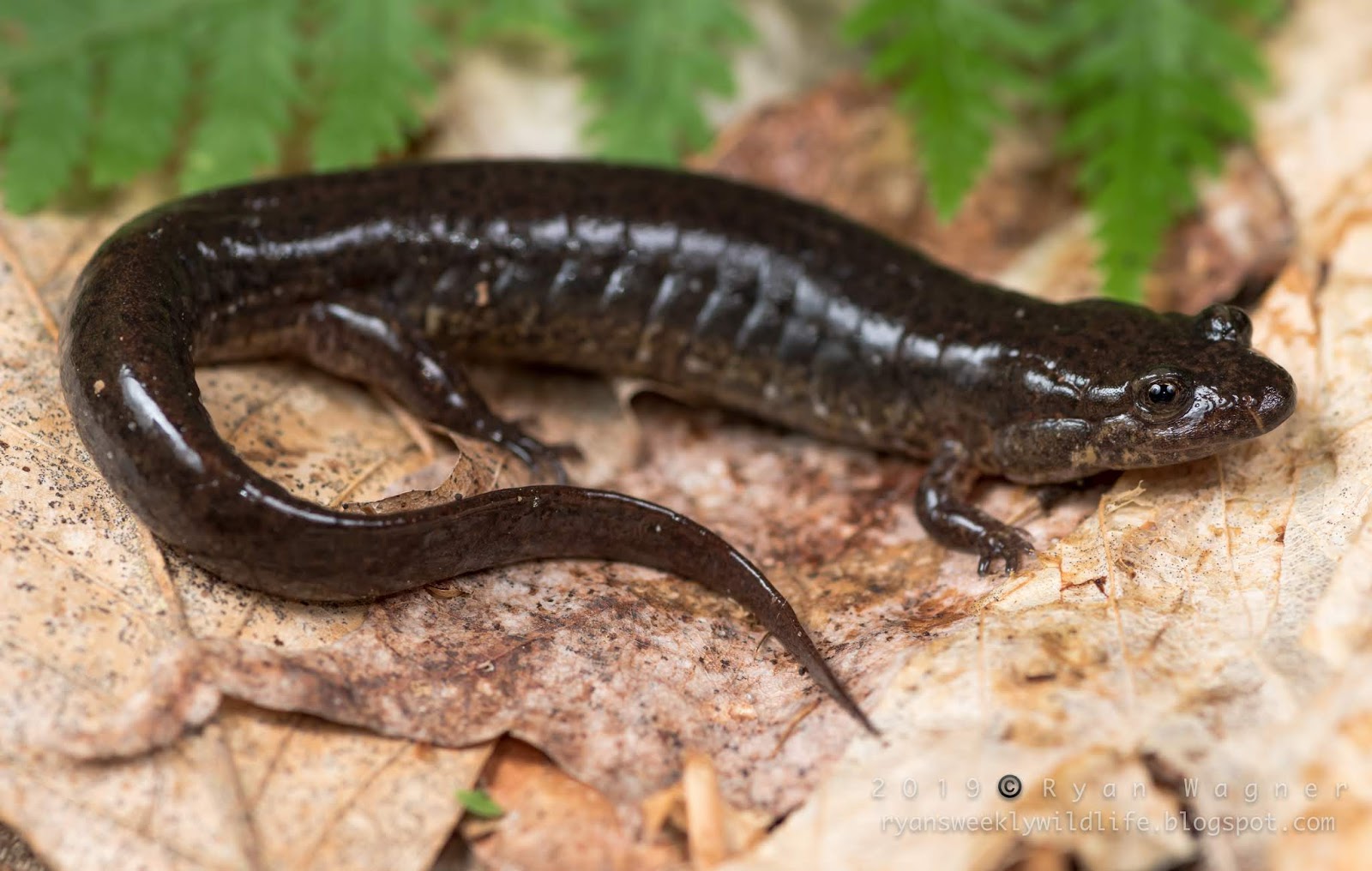
Northern Dusky Salamander.


What makes Hubbard Brook such a research Mecca, are the long-term, large-scale experiments that have been ongoing here since the 60s.  Located in Central New Hampshire in the southern part of the White Mountains, this 7,800 acre valley has entire watersheds devoted to answering specific questions regarding natural and human disturbances.  In the 1960s, 70s, and 80s, several watersheds were systematically deforested to varying degrees to determine the effects on forest regeneration, stream flow, and nutrient cycling.  In 1999, another watershed had 45 tons of calcium dropped by helicopter to offset the effects of acid rain.  Other, large scale experiments have included artificial ice storms, climate change monitoring, and impacts of disease and invasive species on plant and animal communities.  The remaining water sheds have been left as controls and are intensively monitored for comparison with these landscape-scale test tubes. 


salamander research at hubbard brook
Northern Two-lined Salamander.


I was hired as an REU (Research Experience for Undergraduates) student for a project working with stream salamanders at Hubbard Brook.  Upon arrival at our field house, I was baffled to find the walls decorated by half a dozen photographs of what appeared to be outhouses.  Much to my embarrassment, it was soon made clear that these were not toilets, conveniently positioned at the top of each of our field sites, but weirs.  The ‘gage house,’ which I had mistaken for a latrine, contains a complex system of pulleys and measuring equipment used to record changes in water flow over time.  Like something out of a disaster movie, a hydrograph scratches a series of jagged lines onto a sheet of paper fed slowly through the machine as the water level rises and falls. 


Salamander research at Hubbard brook experimental forest
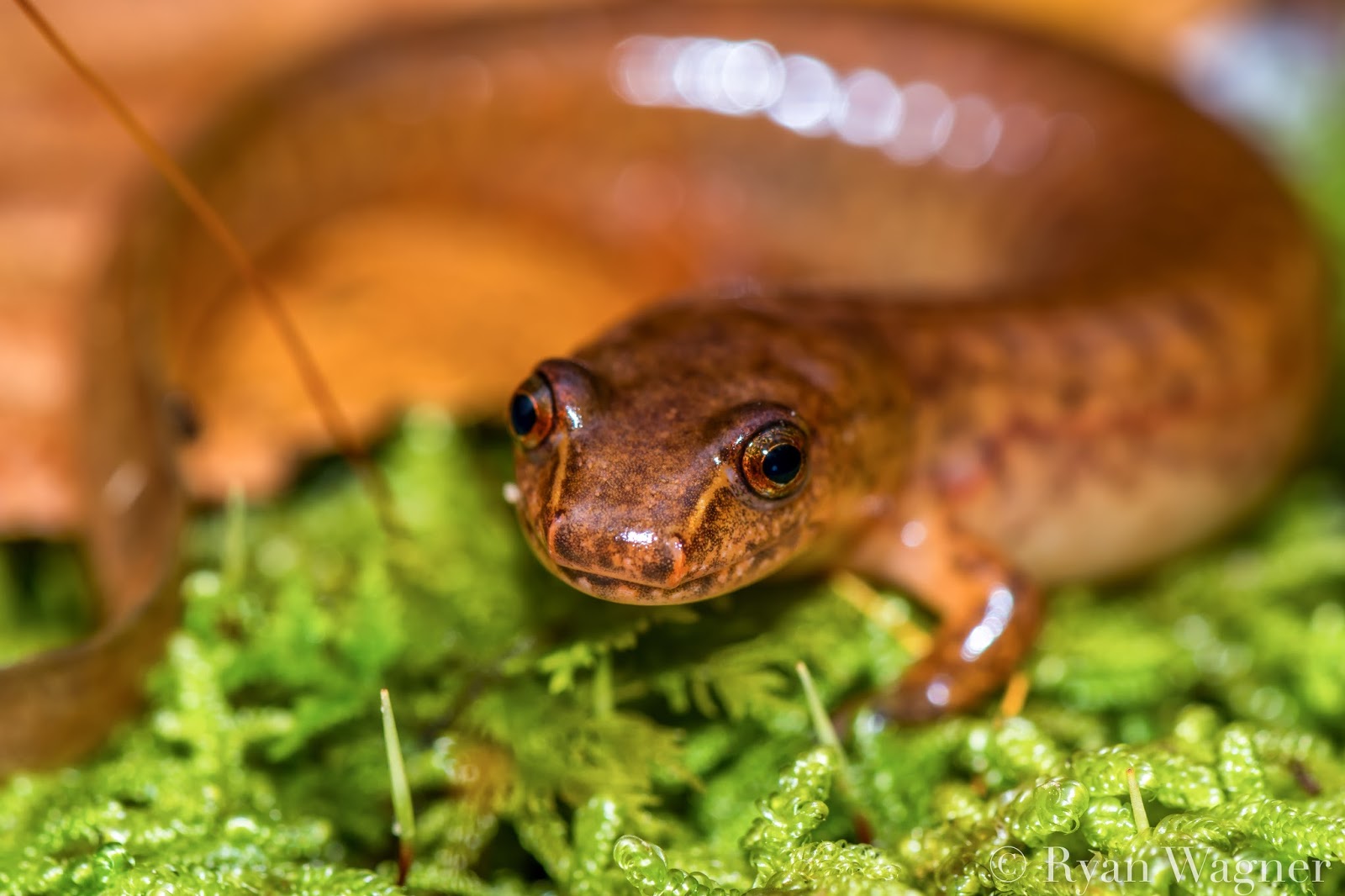
Northern Spring Salamander.
While often used to describe the entire apparatus, the ‘weir’ itself actually refers to the V-notch, a V-shaped cut in the front of a large, rectangular collecting pool or ‘ponding basin’ over which water pours back into the stream.  Thanks to the design of the V-notch, the height of the water in the ponding basin translates to the amount of liquid flowing out of the watershed.  Occasionally, high flow events overtake the level of the V-notch, rendering its measurements useless.  A backup ‘flume’ which sits behind the ponding basin, is used in these cases.  It also records the flow rate, but to a less accurate degree. 

There are nine weirs in the Hubbard Brook valley, each measuring the flow of a different stream.  Thanks to the long-term data these weirs collect, scientists can test hypotheses regarding differences in stream flow rate as well as monitor water levels on an hourly basis.  Stream flashiness is of particular interest to wildlife biologists studying stream dwelling organisms.  A “flashy” stream swells rapidly during a storm before dropping back to baseline levels just hours after the precipitation has passed.  This rapid influx of water can modify habitats by overturning rocky substrate and woody debris, influencing survival of everything from macroinvertebrates to fish and amphibians. 


salamander research at hubbard brook experimental forest
A large Northern Spring Salamander.
Dr. Winsor Lowe of the University of Montana has been collecting data on spring salamanders in New Hampshire for decades.  He has revealed some fascinating patterns related to their movements and dispersal, but one recent finding suggests a decline in adult salamander numbers over the past few years.  It has been hypothesized that increased stream flashiness could be to blame.  Two of his students, Maddy Cochrane and Leah Swartz, are hoping to shed some light on this mystery.

Maddy is a first year PhD student with short, brown hair, a can-do attitude, and a keen sense of adventure—she once told me about a personal bet to try every rope swing she sees.  Maddy conducted her Master’s research on wood turtles in Minnesota and is now using the closely studied hydrology of Hubbard Brook as a proxy for the impacts of climate change.  Leah Swartz did her Master's with Dr. Lowe and is now manager of his lab.  She has a tall, runner’s physique and a strict attention to detail.  Leah is helping me craft my own independent project (one of the perks of being an REU student) looking at the impacts of fish predation on salamander stress levels. 


Larval spring salamander winsor lowe
A larval Northern Spring Salamander.


While I recuperate on the couch after a “short” eight-hour day in the field, Maddy and Leah typically head out for an afternoon run and swim, or the occasional rock-climbing session.  How they find the time and energy, I don’t know.  These two are more like ultimate rocky mountain tour guides than any biologist I’ve ever met.

With the help of telemetry, Maddy, is getting to know the day-to-day lives of spring salamanders better than just about any other scientist.  After inserting 12-millimeter PIT tags beneath the skin of three dozen spring and dusky salamanders, she has been able to record their fine scale movements and habitat preferences.  A telemetry wand, reminiscent of a metal detector, can locate these PIT tags from as much as 30 centimeters away as it is waved over the rocky substrate of the stream bed.  This is only her first year of data collection, but hopefully these intimate observations will help us understand what environmental factors contribute to reduced survival in salamanders.

hubbard brook salamanders
A larval Northern Spring Salamander.
Before we can collect any of this data, however, we must catch the secretive salamanders.  For the first three to five years of life, northern spring salamanders are fully aquatic.  During this life stage they are called larvae, and have feathery, external gills, fish-like eyes, and a large, paddle-shaped tail.  Unlike a frog and its tadpole, these larval salamanders have two skinny pairs of legs, making them more closely resemble the adults.  Once a larva goes through metamorphosis, it absorbs its external gills, changes from a silvery gray to a dark, mottled orange, and begins to forage on land.  As basal members of the family Plethodontidae, adult spring salamanders lack lungs and respire through their permeable skin.  Unlike some of their more derived relatives, the genus Gyrinophilus is strongly tied to the water, and adults can commonly be found under rocks along stream margins or even submerged in the main channel, or thalweg. 


Salamander research at hubbard brook
Leah Swartz with Tupperware full of salamanders.
Leah is adding to Dr. Lowe’s long-term mark/recapture data set by conducting 500-meter-long surveys in each of six stream reaches.  By the end of this summer, we will have conducted 54 of these surveys, flipped 27,000 rocks, and caught just shy of 1,000 salamanders.  A good day’s haul can land us with nearly 50 salamanders to process, though a few reaches consistently (and frustratingly) turn up five or less per day. 

We begin each survey staggered along the stream every 100 meters, armed with zip-lock bags, pockets full of flagging, and a tally counter.  I move along slowly, hopping from one granite boulder to the next, flipping large, rounded rocks every meter.  Two hands are essential to keep these rounded stones from spinning in their sockets and crushing anything that might be lurking below.  Any rock, no matter how inconveniently positioned, could hide a salamander.  I grip the rough, almost sharp, texture of one particularly good-looking rock, and gently lift it out of the water.  An elongate, silvery body wriggles nervously in the clear, gently flowing current.  With one hand, I cut off the salamander’s escape and usher it gently towards my open plastic bag held flush with the stream bed.  The salamander darts to one side of my trap, then to the other.  After a few moments of finessing with the stubborn amphibian, it enters the bag just far enough for me to scoop it out of the water.  I mark its rock with a piece of flagging and record the meter location and habitat. 


injecting PIT tag into salamander
Inserting a PIT tag into an adult Northern Spring Salamander.
Each salamander we catch goes through the same rigorous processing.  First, I scan each salamander for a PIT tag, noting any recaptures.  New salamanders are sedated using an anesthetic called MS-222.  Once asleep, I can easily make a small, painless incision in the salamander’s flanks.  The cut is just deep enough to break the skin; they don’t even bleed.  A PIT tag is then inserted under the skin using a syringe.  Prior to the use of PIT tags, researchers injected salamanders with elastomer.  This is essentially a coded tattoo that fluoresces under a black light.  If we can catch our marked salamanders again in subsequent surveys they can help us understand population size and survival probability.

We record weight, snout-vent length, sex, and note tail condition before snipping off a small piece to be preserved for DNA analysis.  This is of little consequence to the salamander, as they can regrow the tail in a few months’ time.  After processing, we allow each salamander time to recover in a fresh water bath before returning them to the very same rock where they were found.  The whole affair takes just a few minutes for the sallies, but catching and processing 50 salamanders can take us all day. 


Lowe University of Montana salamander research
Northern Spring Salamander in Stream Habitat.
As of today, we have just ten mark/recapture surveys remaining before we head back to our respective universities.  I have added to my repertoire of weird wildlife skills and, for the first time in my undergraduate career, I have had the opportunity to ask my own research questions and conduct my own experiments.  We are currently in the process of collecting corticosterone samples in four of our stream reaches to compare salamander stress levels with and without predation from fish.  I still have much to learn as I begin the daunting tasks of writing up our results while simultaneously entering my final year at Ohio University, but I feel more prepared for the future of my academic career than ever.  Maddy and Leah have been great friends and mentors this summer, and who knows, maybe I will even end up doing a grad project in their lab.  

These past four months at Hubbard Brook have helped me grow immensely as a young scientist.  I will miss waking up to the mournful calls of loons each morning and looking for moose in the evenings.  Hubbard Brook has been pumping out science and scientists alike for decades and I feel proud to be a part of that legacy if only in a small way. 

I know I will have to return to this amazing community of researchers and field technicians soon.

Thanks for reading!
Keep living the field life
RBW

Monday, December 4, 2017

Springs in the Fall

Field Life
The late fall air carried a brisk urgency that comes with the approaching winter months.  A deep breath of the crisp autumn air seemed to sharpen my senses and sent a shiver of goosebumps down my spine. One good rainy or windy day, and the foliage would be gone, leaving the trees as bare, skeletal fingers reaching towards the sky.  With its burst of colors and scents, fall is possibly my favorite season.  Like spring, there is a sense of necessity.  Animals are on the move, each species pursuing a different chapter in their lives.  For many, including reptiles and amphibians, fall is a storm before the calm.  The waining temperatures provide the last opportunities to feed, mate, and find overwintering sites.  There is a brief period of activity before they mysteriously disappear for nearly half the year.  With the season for snakes all but past, Carl and I were on the hunt for salamanders. 

Salamanders are a fickle group of herps.  With their moist skin and subterranean or aquatic habits, salamanders are much less dependent on ambient air temperatures.  This means they can remain active long after their reptilian kin have hunkered down for the winter.  Safely nestled under rocks and logs, they can still be discovered even once the icy chill has taken hold. Carl and I hiked into the trees, along a bridal trail that brought us to the edge of a ravine.  The ravine was fed by a series of natural springs and seepages—the perfect conditions for our amphibious quarry.  

Carl had brought along a large dip net to sample the deeper parts of the stream.  Like shoveling snow from a driveway, he scooped up some of the leaf litter choking a stagnant, muddy pool.  Dumping the pile of leaves and sand onto the ground, we started sorting through its contents. As we reached the bottom of the pile, a little wormlike creature wriggled away.  We scooped the animal into a tupperware container filled with clear creek water.  Now free to move about naturally, the creature became very un-wormlike indeed.  

Field Life
A larval red salamander.

Like a tiny dragon, the creature pushed its elongate body through the water on four slim legs.  Two fishy eyes sat on the top of its large head, which was lined by bushy, finger-like projections.  This little water monster was in fact a larval salamander.  A northern red salamander (Pseudotriton ruber) to be precise, evident from the shape of its head and its distinct pattern of spots.  The feathery filaments that lined its neck were gills, allowing the larvae to live full time in the stream.  At around 4 inches in length, it would soon metamorphose into an adult and make the transition to land. 

Field Life
A larval spring salamander.
Carl tried the dip net again, this time coming up with another larval red and an adult northern dusky salamander (Desmognathus fuscus).  After snapping some photographs we released the salamanders back into the pool.  We continued down the creek, dip netting and gently flipping flat stones so as not to cloud the water and obscure what might lay below.  Under one stone we were able to corral a slightly larger larval salamander into our bucket.  Upon closer inspection, this salamander displayed a mottled pattern, more like the sandy stream bed.  Its longer “weiner dog” body and square snout made it clear this was something different—a larval northern spring salamander (Gyrinophilus porphyriticus).  Catching the larvae was fascinating, but now I had my heart set on an adult.

Reptiles and Amphibians
Adult red and spring salamanders are not common finds.  Like most of Ohio’s salamanders, the adults are typically more terrestrial.  In the interest of time and efficiency, we focused on the “good rocks.”  A “good rock” is less a physical descriptor and more a personal feeling.  Any rock can be a “good rock,” just as long as it strikes you as something a salamander might like to hide under.  

There is some method to this madness.  Salamanders like to wedge themselves as tightly as they can under cover where predators cannot easily reach them.  Large, flat rocks provide ample room to squeeze under, making them particularly appealing to amphibians (and to amphibian searchers).  Stones stacked on top of one another with tight gaps in between are particularly good spots to check.  It is a bewildering fact that “good rock” often yields nothing but sediment.  I lifted one particularly nice stone slab revealing the perfect gap for a salamander—but no dice. “That should have had something,” Carl commented, knowing the feeling all too well.

Field Life

Usually sacrificed with adulthood, the childhood instinct to flip stones is something herpers never fully outgrow.  This quirk of stopping to check below every piece of cover can become (to my amusement) quite irksome to fellow hikers who wouldn't look twice at a lovely flat rock.  Stones are like potato chips, you can never flip just one—it's addictive.  The odds of discovery naturally increase the more objects there are to check.  Experience brings a sense of what looks right, making the “good” rocks start to stand out.  It should be noted that one of the most important rules of rick flipping is to return the rock to its original position.  This minimizes damage to microhabitats; after all, a lot more than just salamanders rely on stones to survive. 

I was born with the rock flipping gene; making the capture, however, was something I had to learn.  As a boy, I was often too slow or too shy to grab whatever slimy or scaly creature I had discovered.  When it was crunch time, I usually hesitated, allowing the animal to inevitably escape.  Luckily, I wasn't deterred.  The illusive nature of herps only added to my childhood fascination.   

Field LifeAs Carl and I continued along the creek bed, I flipped a large, mossy stone sitting among a pile of leaves on the bank.  A fat, rudder of a tail wriggled for cover.  I had the creature in hand before my brain could process spring salamander.  Jittery with adrenaline, I called out, “got one!”  

Our specimen was around 5 inches in length, the biggest sallie so far, but still small by spring standards.  I was sunned when I first learned that spring salamanders could grow to around 9 inches in length.  Springs are some of the most aquatic plethodontid (lungless) salamanders in Ohio. Adults can be found under cover (as ours was) or among their larvae in leaf-clogged, predatory fish-free streams.  On warm, rainy nights, when slimy creatures venture away from their daytime hide-aways, spring salamanders can be found by road cruising.  


There are two spring salamander subspecies that occur in Ohio: the northern spring (G.p.porphyriticus) and the Kentucky spring (G.p.duryi).  Both races are thinly scattered throughout forested ravine bottoms in southeastern Ohio.  Breeding takes place in underground springs during the winter, making this species even more difficult to find.

Unwary herpers be warned.  Place a spring salamander in a container with a smaller salamander species, and you will end up with one very fat porphyriticus.  Springs are infamous for being salamander hunters, often feeding on northern duskies and two-lineds (Eurycea bislineata) as well as invertebrates.  They can even be cannibalistic, chowing down on small and newly metamorphosed members of their own species.

Field LifeAs I placed the spring salamander on its mossy stone for photographs, I was still shaking with excitement.  I am always surprised when I actually find the fabled creature I am searching for. Photographs and species accounts are no substitute for the real thing.

Our individual was a soft cream color—Carl considered it “ugly” for a spring.  I couldn't agree. With their large muscular tails, springs are energetic, nimble salamanders (as I would soon learn). As I repositioned the salamander, it instinctively dove for the water.  Trying to grapple with a wriggling salamander is like trying to hold onto a lubed up fishing lure that is being rapidly reeled away.  It felt like trying to regain control of a hacky sack in the last seconds before it is inevitably kicked out of reach.  The salamander plopped into the water and disappeared into a tangle of leaves.  I stood up with nothing to show for my efforts except a muddy pair of knees and a two handfuls of viscous slime.

Field Life
Loss aside, I ended up flipping three more springs, one in each of the four ravines we would hike that day.  Two were a stunning salmon-tone, while the fourth was a silvery, gun-metal gray.  The trip had brought us to some gorgeous locations.  Huge rock walls towered over us with waterfalls cascading hundreds of feet to patter against boulders and babbling brooks.  I left with another species to check off my list and a camera full of photos (around 350!).

I often wonder where the time goes.  With another herping season drawing to a close, I am forced to hunker down into what might be my own winter hibernaculum.  Like the snakes and salamanders that have enchanted me, I find myself waiting for vernal warmth to return. Increasingly frigid temperatures and waining daylight make it a challenge to get outside and explore.   I must constantly remind myself that even on days that feel still and lifeless, there is something, somewhere to be discovered.  Nature always has a story to tell; with luck, I hope to find those stories.


Field Life

More Articles